
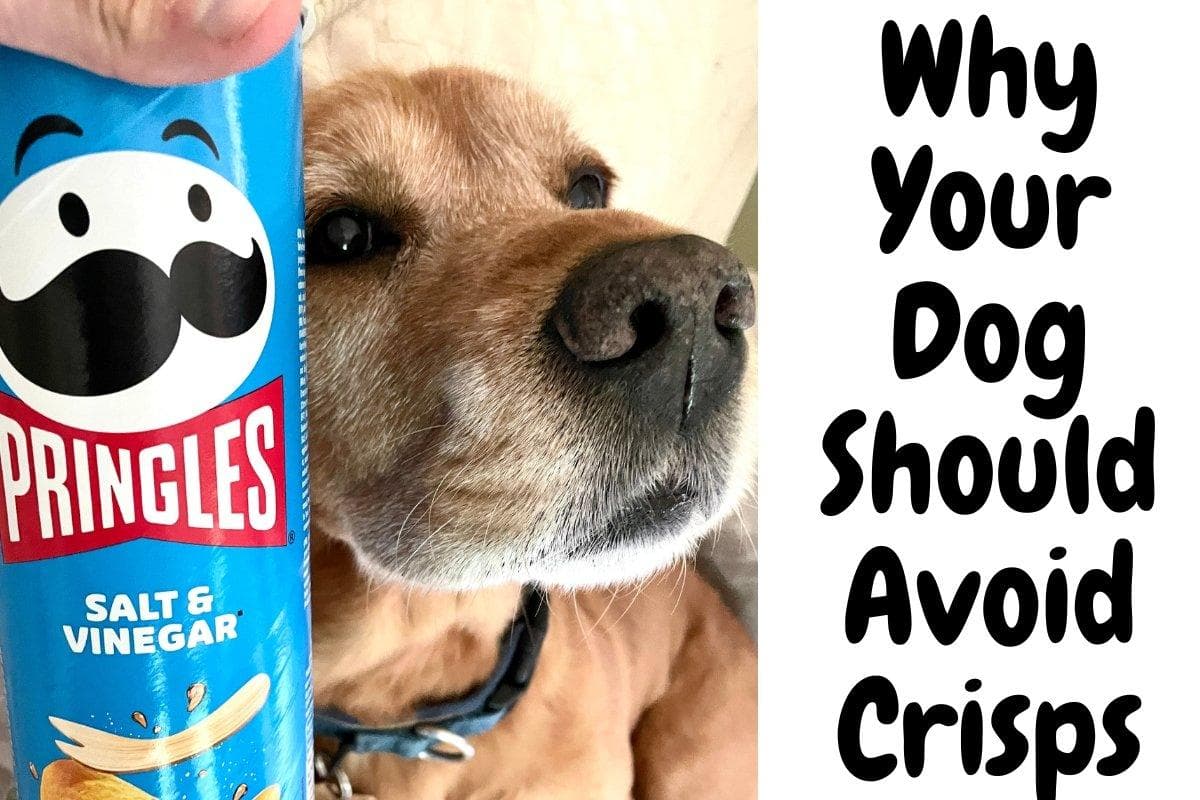
Whether you like it or not, crisps come under the umbrella term of 'junk food'. For this reason, dogs shouldn't be eating them.
Understandably, many dog owners are eager to share their own favourite snacks with their pooches. In most cases it's ok to do so. We all know that human grade food has its nutritional advantages. However, crisps don't provide any nutritional advantage to dogs (nor humans for a matter of fact!).
Let's take a look at why that is...
Table of Contents
Why crisps are bad for your dog
1. No nutritional value
Crisps in general do not contain any protein, superfoods or healthy fats. Although most brands have phased out trans fats, some products are still high in saturated fats. These types of fats are very unhealthy for pets.
2. High salt content
Salt intake in dogs can lead to salt toxicosis. For this reason, you will see that a lot of dog foods have actually a low salt content compared to what us humans eat.
The National Research Council recommends that dogs should not have more than about 200mg of salt per day if over 33lbs. And not more than 100mg per day if they weigh less than that.
A single serving or packet of crisps (30g) can have about 300-400mg of salt per packet! - see table below for the salt content of various popular brands. Pringles appears to be the worst in terms of salt.
3. High in fats
High-fat foods can contribute to obesity and pancreatitis. Untreated pancreatitis has high mortality and even once you treated it, there is high morbidity associated with it, and high vet bills too!
This study published in The Journal of Veterinary Internal Medicine in 2022 looked at the risk of dogs developing pancreatitis. It found that dogs fed a high-fat diet had a 32.4% higher risk of developing pancreatitis than those on a balanced diet. (source)
4. Artificial additives, colours and flavorings
Unfortunately it's very hard to buy healthy food these days, even for us humans. In addition to the poor nutritional content, crisps also contain unhealthy additives and artificial flavours. Onion and garlic, common flavourings in many crisp brands, are toxic to dogs. As you can see above, even lentil crisps or other non-potato crisps may contain flavourings and other additives.
Salt content of various crisps brands in USA:
Brand
Flavour
Salt content (per 30g)
Lay's
Classic
0.23g
Lay's
Sour Cream & Onion
0.28g
Lay's
Salt & Vinegar
0.34g
Ruffles
Original
0.25g
Ruffles
Sour Cream & Cheddar
0.30g
Pringles
Original
0.37g
Pringles
Salt & Vinegar
0.57g!!
Cheetos
Crunchy
0.28g
Cheetos
Flamin' Hot
0.42g
Fritos
Original
0.22g
Funyuns
Onion
0.31g
Salt content of various popular crisps brands in the UK
It's amazing how the salt content can vary so much by flavour!
Brand
Flavour
Salt content (per 30g)
Walkers
Ready Salted
0.21g
Walkers
Cheese & Onion
0.24g
Walkers
Salt & Vinegar
0.33g
Walkers
Oven Baked Cheese & Onion
0.12g
Walkers
Wotsits Really Cheesy
0.39g
Walkers
Salt & Vinegar Squares
0.33g
Pringles
Original
0.36g
Pringles
Salt & Vinegar
0.57g!!
KP
Skips Prawn Cocktail
0.30g
Tesco
Lentil Curls Sour Cream & Chives
0.09g
Popchips
Sea Salt & Vinegar
0.22g
Tyrell's
Sea Salt & Cider Vinegar
0.25g
Tyrrell's
Lightly Salted
0.20g
Graze
Sea Salt & Cracked Black Pepper
0.21g
Graze
Sweet Chili & Lime
0.20g
Quavers
Cheesy
0.5g
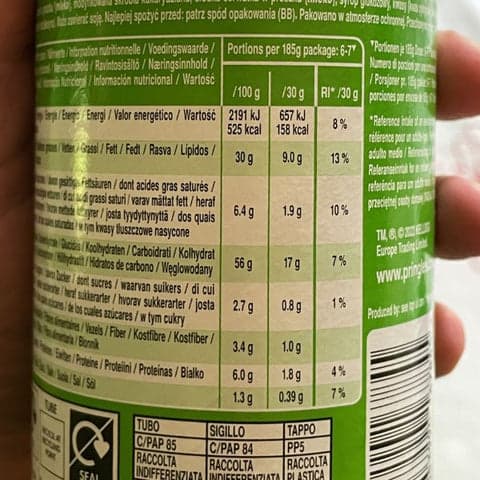
Here is the Pringles Sour Cream & Onion nutritional content, just in case you think I am making these numbers up:
And this is the Pringles Salt & Vinegar content showing a huge 570mg of salt per 30g serving. To put this into context, the whole packet is 185g which means there are about 6 servings.
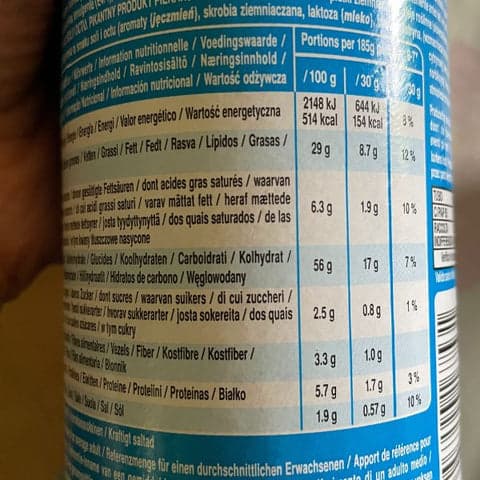
A "serving" of Pringles is only about 13 crisps.
Even a single Pringle has about 45mg of salt, which means that after having two, your dog has already met its maximum quota of salt per day..
Can Dogs Eat Wotsits?
No, definitely not. This is the nutritional content of a bag of Wotsits (30g) and as you can see, it has about 390mg of salt per bag. This significantly exceeds the recommended daily intake of salt for a dog, no matter the size.
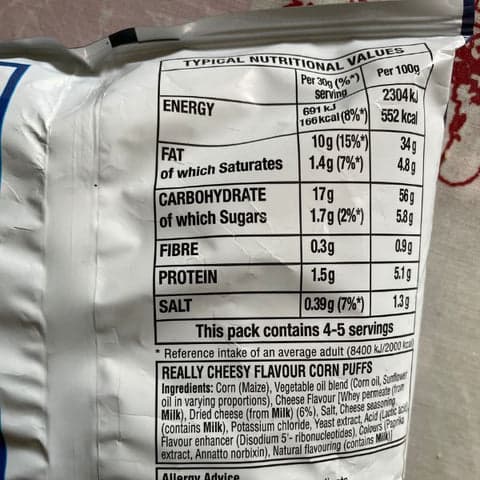
Wotsits also have flavour enhancers, colours, flavourings and other ingredients that dogs can't digest properly. It can subsequently lead to an upset tummy or other digestive problems in the short term.
Can Dogs Eat Lentil Crisps?
It's interesting that some brands of Lentil Crisps have a lower salt content than potato crisps. This is the case for Tesco's own branded lentil crisps. However, this does not apply to all.
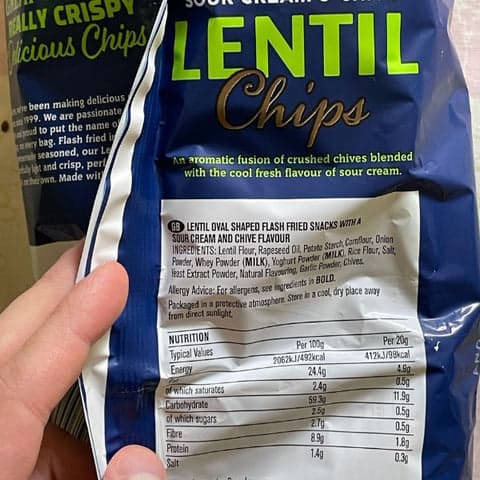
This brand of Lentil crisps from Burts have about 0.3g of salt per packet. This is the equivalent of normal crisps and it's too much for dogs to have.
All in all, there are far better snacks that dogs can safely have. Try to focus on foods that are also good, healthy and nutritious for humans. This tends to apply to the majority of foods that grow in nature, with a few exceptions of foods that dogs shouldn't have.
What about.... Quavers?
Can Dogs Eat Quavers?
They shouldn't eat Quavers. In terms of salt content, a single packet has a huge amount of 500mg of salt or sodium.
This is a lot for a dog and even a few Quavers at a time can add up. Not to mention the additional synthetic flavouring and colours that's added to them. Of note, Quavers also contain monosodium glutamate which is not recommended in dogs.
Before you go...
I know I kept going on and on about why dogs can't eat crisps in this article, but are there better alternatives? Fruit, vegetables and other home made snacks are always the best choices! For more inspiration, have a read of my next article on what dogs should and should not eat.
References
Book: Nutrient Requirements of Dogs and Cats By National Research Council, Division on Earth and Life Studies, Board on Agriculture and Natural Resources, Committee on Animal Nutrition, Subcommittee on Dog and Cat Nutrition